


Yes, Your Dog Might Be Watching…
You walk into the living room and there’s your pup, ears perked, head tilted, eyes locked on the screen. Are they really watching that nature show? Or just reacting to random flashes of color and sound?
It turns out, dogs can watch TV, at least, many of them can. And for some dogs, it’s not just background noise, it’s enrichment, entertainment, even comfort when they’re home alone.
In this blog, we’ll dig into the science behind dogs and screens, explore what kind of shows they actually enjoy, and share how Doggy Woods TV has become a favorite for pups in Marysville, WA and beyond.
🎬 Subscribe to Doggy Woods TV on YouTube
Let’s start with the basics: can dogs even see what’s on the tv screen?
The Short Answer: Yes, But Not Exactly Like We Do
Dogs see the world differently from humans. While we have trichromatic vision (three types of color receptors), dogs are dichromatic, meaning they see mostly shades of blue and yellow. So while your pup won’t catch every color on screen, they can recognize movement, contrast, and certain hues that grab their attention.
But that’s not the only factor. The refresh rate of modern TVs is a big deal. Older TVs flickered too slowly for dogs to process, but today’s high-definition screens have a faster refresh rate, making movement appear smoother even for canine eyes.
According to a study published in the journal Animal Cognition, dogs are not only able to perceive images on screen, but they can also recognize other furry friends on TV, even if they’re only shown a silhouette or barking sound source.
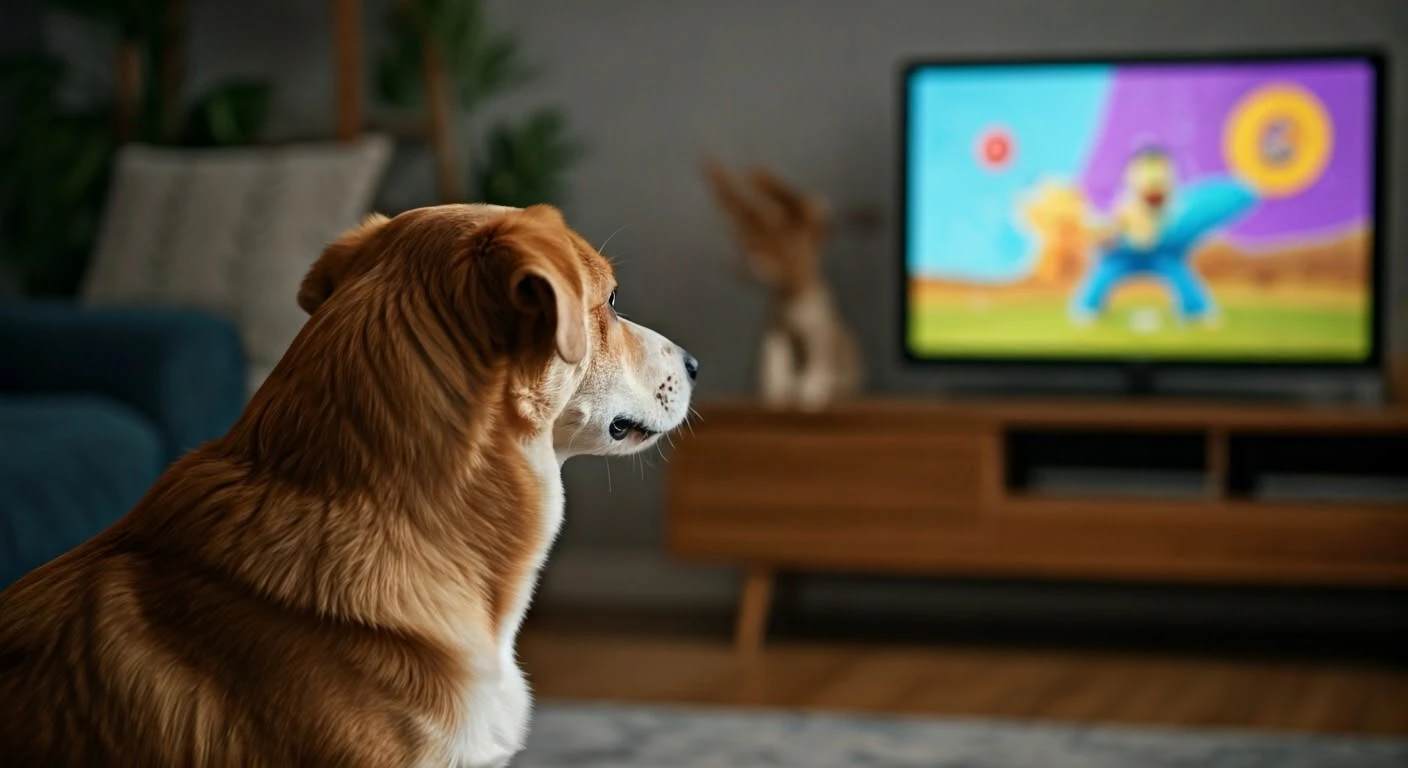
Some Dogs Love It. Others Don’t Care.
Just like people, dogs have their own personalities. Some pups get glued to the screen when they see movement like birds flying, squirrels running, or other dogs playing. Others might glance at it once and go back to chewing their toy.
Why the difference? It often comes down to:
Different Breed tendencies – Herding breeds like Border Collies and Australian Shepherds are more visually tuned in and may respond to continuous motion on screen.
Individual personality – Some dogs are naturally more curious or stimulated by sight and sound.
Sound cues – Dogs may not react much to visuals alone, but throw in barking, squeaky toys, or rustling leaves, and suddenly, they’re hooked.
In fact, research from Canine Science Forum shows that dogs prefer watching other dogs more than anything else on TV, and will even choose videos of dogs over static images or humans.
That’s why we created Doggy Woods TV. It’s made just for dogs, with natural scenes, dog sounds, and a relaxed vibe that matches how they experience the world.

How to Tell if They’re Into It
Not sure if your pup is truly watching or just zoning out? Here are some clear signs your dog is actually engaged with what’s on screen:
Eye Contact
They stare at the screen, follow movement with their eyes, or tilt their head when something changes.
Ear Movements
Their ears perk up or turn toward the TV when they hear barking, squeaking, or other animal sounds.
Body Reactions
Some dogs will bark, wag their tail, or even jump up when a dog runs across the screen. Others might get closer to sniff or paw at the TV.
Extended Viewing
If your dog keeps looking at the TV for more than a few seconds especially when dogs or wildlife appear, they’re probably watching on purpose.
According to experts at the American Kennel Club, many dogs recognize shapes, patterns, and sounds, even on flat screens. They also respond better to high-definition images and TVs that refresh at 100Hz or more, which look smoother to canine eyes than old-school screens do.
So next time your dog perks up during Doggy Woods TV, they’re probably not imagining things; those sights and sounds are speaking their language.
Not All TV Is Created Equal (Especially for Dogs)
When it comes to canine-approved screen time, not everything grabs their attention. But some types of content seem to hit just right. Here’s what most pups respond to:
Real Life Sounds
Dogs love familiar sounds, barking, panting, squeaky toys, crunching leaves, chirping birds. These cues mirror the sounds they’re naturally tuned into.
According to a study published in Animal Cognition, dogs can recognize species-specific vocalizations, meaning yes, your dog really knows that bark is another dog.
Other Dogs
Video content featuring dogs running, playing, sniffing, or walking in nature tend to hold attention longer. That’s one reason Doggy Woods TV is so popular, it shows real off-leash dogs doing real dog things.
Nature Settings
Forests, ponds, open fields, and dogs may not fully “understand” the setting, but they’re drawn to movement and sound combinations that mimic outdoor life.
Wildlife
Squirrels, ducks, deer, and other animals pique their natural prey drive. Fast motion + high-pitched sounds = instant engagement.
Close-Ups Over Wide Shots
Big close-ups of a dog’s face or a wagging tail make more sense to a dog’s vision than far-off scenes with too many distractions.
Pro Tip: Turn Up the Volume
Dogs rely more on sound than sight. If you’re playing Doggy Woods TV, keep the sound on to help your pup stay engaged and curious.
Real Dogs. Real Woods. Real Fun.
At Doggy Woods Retreat, we didn’t just wonder if dogs watch TV; we made it happen. That’s how Doggy Woods TV was born. It’s a YouTube channel built just for dogs. No weird animations. No fake sounds. Just real-life sights and sounds from our off-leash forest in Tulalip, WA.
And yep, the channel is crushing it! We’ve got tons of real, dog-approved videos that you and your pup can throw on the big screen at home. So whether you’re leaving your dog home alone or just want to see them perk up at the sound of forest birds and squeaky sticks, there’s something for every pup (and human) to enjoy.
Watch and Subscribe on YouTube →
You’ll find:
Calm forest walks with the pack
Playtime around the pond and trees
Peaceful nap time in the grass
Close-ups of happy tails and curious sniffs
Real sounds from birds, wind, and paws on dirt
Puppies with too much energy
Dogs home alone
Rescue dogs adjusting to new homes
Senior dogs who love calm visuals
Anyone needing a little nature in their day

Mark shared, “I’m an avid viewer of Doggy Woods Retreat. I keep it on one of my TVs for Max at all times. Thank you for all these beautiful friends.”
For Max, Doggy Woods TV isn’t just background noise; it’s a daily window into the pack. From home, he gets to see his “beautiful friends” and feel part of the adventure.
One TV, one happy dog. That’s why we do it.
TV Can Help, But It’s Not a Fix-All
Letting your dog watch TV now and then? No harm there. In fact, for many pups, it can be a nice way to relax, break up the silence, or stay mentally stimulated, especially when left home alone.
But it’s not a replacement for play, social time, or outdoor adventures.
At Doggy Woods Retreat, we’re big fans of balance. A walk in the forest? Always better than watching one on a screen. But if your pup is stuck inside during the workday or needs a calm-down moment after play, TV can be part of a healthy routine.
While you’re away (helps some dogs feel less alone)
During crate time (to reduce boredom or restlessness)
For anxious dogs during storms or fireworks
As background noise instead of silence
Alongside puzzle toys for mental stimulation
If your dog:
Gets overstimulated easily
Reacts aggressively or fearfully to noises or motion
Has known vision or neurological issues
Is showing signs of obsessive behavior toward screens
…it might be best to limit screen time or check in with your vet or behaviorist first.
Just like us, dogs need a mix of stimulation, rest, play, and social time. Use TV thoughtfully, and you might find it becomes a surprising helper in your dog’s day-to-day life.
Some dogs love TV. Others barely glance. And that’s totally okay.
Like people, dogs have their own personalities and preferences. Some are drawn to fast movement or animal sounds. Others just want a cozy nap beside you. What matters most is giving them options and paying attention to how they respond.
At Doggy Woods Retreat, we see it every day. Some dogs are mesmerized by our forest videos. Others are more excited about the real pond outside. Either way, they’re engaged, relaxed, and part of the pack.
🎬 Want to try it out?
Start with a few minutes of Doggy Woods TV and watch your dog’s reaction. You might be surprised at how quickly they perk up when they hear paws crunching leaves or tails wagging in the woods.
And if you live near Marysville, WA, we’d love to meet your pup in person. Let them explore the real Doggy Woods with us!
Yes, many dogs can see images on modern TVs. Thanks to higher frame rates and HD resolution, dogs are able to recognize shapes, movement, and even animals on screen.
TV can be part of a calming routine. If the content is gentle, like forest sounds, calm animals, or nature walks, it can reduce boredom and ease mild anxiety. Our Doggy Woods TV videos are made for exactly that reason.
Dogs tend to respond best to:
That’s why our YouTube channel is full of natural, off-leash forest adventures, real sounds, real dogs, real fun.
Not at all in moderation. Watching TV won’t hurt a dog’s eyes or brain. Just make sure they’re still getting exercise, playtime, and naps like usual.
It depends on the dog breed, age, and personality. Some breeds are more visually alert, while others rely on their sense of smell over sight. Older dogs may have less interest or sharper night vision that picks up different details than we do. So if your dog ignores the screen, don’t worry, it doesn’t mean they aren’t happy or stimulated.
Totally! Many pet parents notice that squeaky toys or real animal sounds on screen trigger barking or tail wags. That’s because squeaky noises mimic prey sounds, which some dogs are naturally drawn to. If your pup suddenly jumps up in front of the TV, they’re just excited and that’s a good sign the video caught their attention.
For dog owners who work or step out for long periods of time, leaving calm TV or music on can give dogs a sense of comfort. Just pick relaxing content (like nature scenes or soft music), and don’t rely on it as the only form of enrichment. A mix of walks, toys, naps, and social time is best.